User Guide Full Index
 Connect to...
 Navigation
File Listing Options
Navigation
File Listing Options
 Selecting and Copying Files
- File Selection Mode
- Selecting Images in the Image Viewer
- Copying Files
- Drag and Drop
- AirDrop Files
- Copy Large files with macOS Finder
- Share Files
- Copy to iOS Clipboard
- eMail Files
- Download Files Using URL
 Viewing Documents
Editing Documents
Annotate/Markup
Viewing Documents
Editing Documents
Annotate/Markup
 Bulk Rename Tools
- Bulk Rename - Add text to filenames
- Bulk Rename - Add Index or Counter
- Bulk Rename - Find and Replace
- Bulk Rename - Rename with Dates
- Bulk Rename - Rename using EXIF Data
 Search
 Creating and Editing PDFs
 Working with Images
 Playing Movies
 Playing Music
- Supported Music Types
- Play Modes
- Queueing Tracks
- Speed Up/Slow Down Playback
- AirPlay Music
- Chromecast Music
- Recording Audio into FileBrowser
 Sharing Folders
 Files App Integration
 Advanced
Where to Find and Manage Trash
This guide explains how deleted files are managed in FileBrowser for Education and where you can access and control trash for each available storage location.
Trash Folder
FileBrowser for Education can send deleted items to a trash folder when you're using one of the following locations:
- On My iPad
- USB Drives
- iCloud
- GoogleDrive
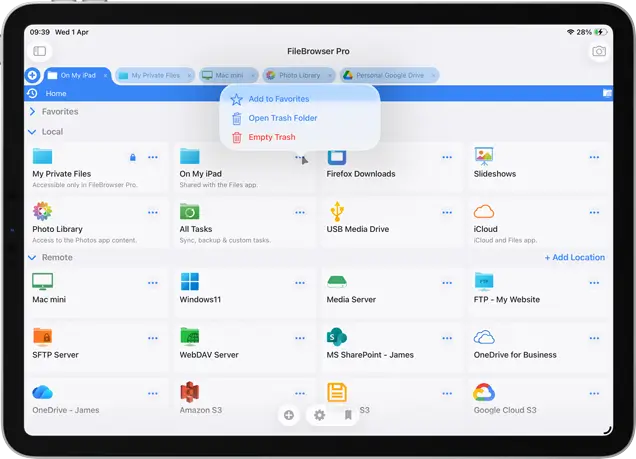
The Trash folder for files deleted from On My iPad can be accessed by choosing Open Trash Folder from the location's menu on the home page.
USB Drives & iCloud
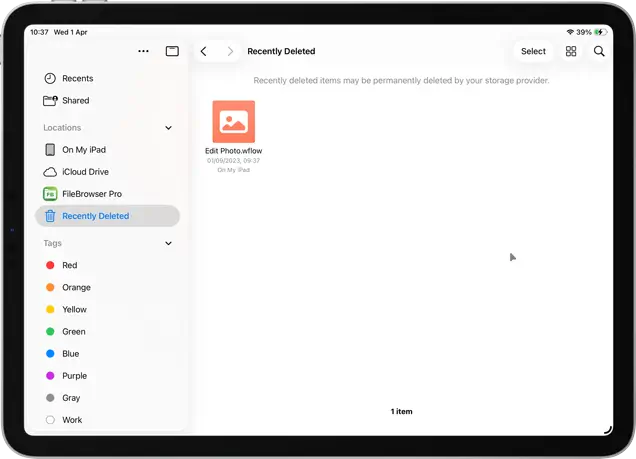
To access deleted files on iCloud and USB drives, use the iOS Files app.
GoogleDrive
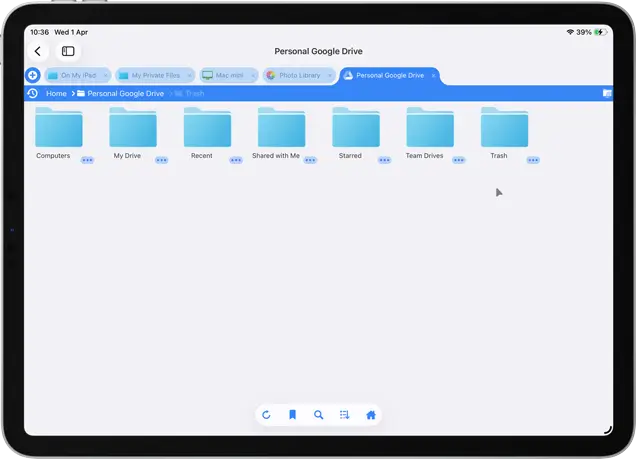
Google Drive has its own Trash folder which you can access in FileBrowser for Education or online.